What it does
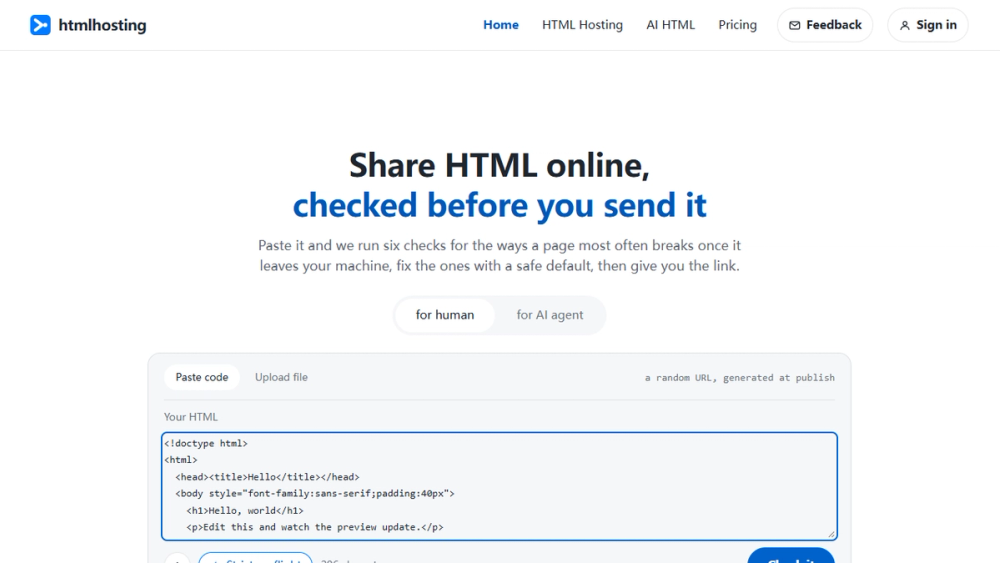
HTML Hosting turns a standalone HTML document into a working URL you can send to somebody. You paste the code (or drop the file), and before anything is published it runs six checks for the failures that only show up after a page leaves the machine it was written on: a missing charset that mangles non-ASCII text, http:// assets that get blocked as mixed content, absolute file:// paths that resolve to nothing, a missing viewport tag on mobile, scripts that never load because they were referenced relative to a local folder, and inline handlers that a strict host would drop.
Each finding that has a safe default fix can be applied with one click; the rest are shown so you can decide. Then you get the link.
Why it exists
A lot of HTML now comes out of a model rather than an editor — a chart, a one-page report, a mock, a dashboard. It renders correctly in the tool that produced it and then looks wrong to whoever you sent it to, for reasons that have nothing to do with the content. The checks are aimed squarely at that gap.
There is also a one-line publish path for agents, so a model can hand a user a finished link instead of a code block.
Practical notes
- Free pages stay up for 30 days and can be extended.
- No account needed to publish a page.
- The URL is random at publish time.